
Restaurant owners open the monthly P&L and looks at the sales, then skips to the bottom line and closes the report.
Sound familiar?
If only those two numbers are examined then the real value is diminished.
They shouldn’t be more dependent on an accounting firm. They should be more confident with their own numbers. It’s not necessary to stay up in the dark putting together invoices or know every accounting rule. It’s crucial to understand why the profit changed and what transpired with the use of labor and food and what questions require to be addressed next week.
This is the premise behind Bookkeeping Chef: automate the bookkeeping tasks that doesn’t require a proprietor’s time, while providing restaurant owners with greater financial transparency that they can utilize.
You should begin by looking at Weekly Numbers and Not just Month-End
Although restaurants are not operating within a calendar month they still need to have an P&L. This week, the managers plan their labor. Chefs order food today. Vendors change prices now.
Bookkeeping Chef’s weekly prime-cost reports are provided alongside the financial statements for the month.
The prime cost comprises two crucial aspects that can be easily transported in a restaurant establishment: cost of the goods that are sold, as well as labor. According to information provided by Bookkeeping Chef, prime costs represent approximately 60% of sales in restaurants.
Think about a situation where sales aren’t changing much while the prime cost is rising. This percentage isn’t an answer. It gives the person in charge a reason to do some research.
Is the hourly wage increasing? Did overtime happen? Costs of food changed? The invoice of a vendor was unusually high. Did the mix of sales changed?
This is a lot more helpful than finding the same problem several weeks later.
Let Automation Handle the Repetitive Work
DIY bookkeeping doesn’t have to be a manual process of transferring POS (point of sale) totals onto spreadsheets.
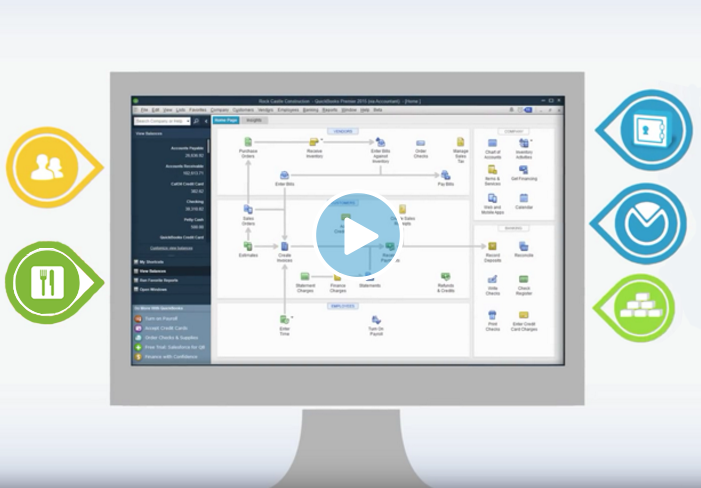
Modern restaurant bookkeeping automation is able to take care of a large portion of the repeated flow of financial data. It connects to various systems, including POS Payroll, QuickBooks, POS, vendor platforms inventory and recipe management and Payment and AP tools.
The purpose is not to automate for its own sake.
It’s to make it easier for manual data entry, and keep financial records current enough that the owner can spend time reviewing information instead of making it.
This leads to a different style of bookkeeping for restaurants. technology is able to handle more mechanical aspects, while the restaurant owner is involved in the financial aspects.
P&L Questions: Find out to Ask More Effective Questions
When you stop treating the P&L as a test, it will become less daunting.
Begin by taking a look at the numbers of sales. Then look at the costs needed to make the sales. Compare the food and beverage industry’s performance. Consider labor. Go through operating costs and examine what’s left.
The importance of comparing periods.
If profits increased but sales grew, but profit wasn’t, something else between those two lines has changed. If food prices was up, you should ask about the changes operationally. Compare staffing with sales to see if the labor percent has changed. Check if the percentage seems strange, instead of assuming that the restaurant experienced poor times.
Bookkeeping Chef can provide monthly P&Ls, which are finished within five days. Business owners can look over the financial performance of their business without having to wait for months to receive financial statements.
For owners searching bookkeeping restaurant solutions, speed is useful but understanding is the bigger objective.
It’s not necessary to DIY everything.
It is not necessary to be the sole bookkeeper in order to avoid giving the entire bookkeeping responsibility to a different person.
Owners can remain in the loop without manually completing each accounting job.
This could mean using automated systems to maintain the flow of information, examining a monthly P&L and weekly reports regarding prime expenses and asking questions in the event that something unexpected occurs.
A specialist in restaurant bookkeeping can aid with this method by making sure the books are in order and helping the restaurant owner understand what they mean.
This doesn’t mean the bookkeeper will be competent to handle every bookkeeping task.
An owner can engage in a dialogue with an P&L regarding the business.
The aim of financial independence isn’t just to write additional reports, but to be able to live a life of financial freedom.
Restaurants already generate massive amounts of data. A different dashboard won’t be as effective.
The true value is when an operator can look at a weekly prime-cost report and recognize that something changed, then open the P&L and figure out where to investigate further.
Bookkeeping Chef’s strategy incorporates restaurant accounting automation, weekly reports, monthly P&Ls, and the provision of financial support for specific restaurants to make this possible.
Automatize repetitive tasks. Review prime cost every week. Learn the language of your P&L.
You do not have to be an accountant.
It is crucial to know the financials of your establishment before you take over as the owner.